

Somewhere along the way, cannabis stopped being a plant and became a punchline to a bureaucratic joke.
We used to have a pretty simple understanding: “marijuana” was weed, the stuff you smoked behind a gas station or bought in a Ziploc from your cousin. Then “hemp” was rope, granola, and vaguely hippie shampoo. But in 2018, Congress tried to draw a clean line—something definitive, something science-y. So they slapped a number on it. Hemp, they declared, would now be defined as any cannabis plant with 0.3% delta-9 THC or less by dry weight.
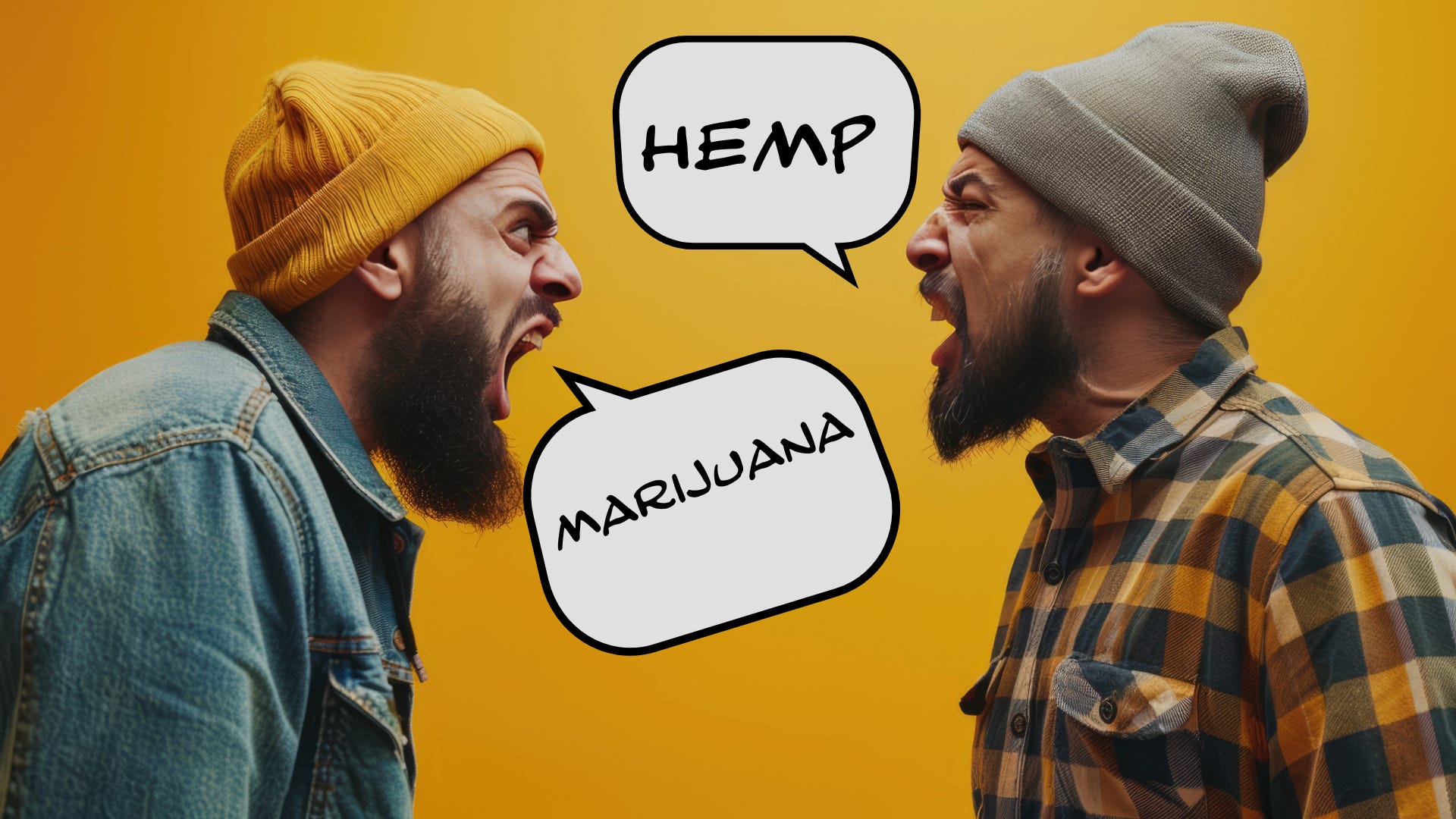
And just like that, a war of words was born.
Because here’s the kicker: that threshold—the very same measurement—used to define marijuana. Yep, back in the day, if your cannabis had any detectable THC, you were holding contraband. Now? It’s legal, as long as the math says so. The result is a surreal, almost Orwellian patchwork of terminology that has politicians, regulators, and even cannabis entrepreneurs tripping over their tongues. Meanwhile, the average customer is just trying to figure out what the hell they’re actually buying.
We’ve got products that are federally legal in all 50 states that’ll knock you straight into next week—and they're made from "hemp." We’ve got weed that can’t be sold across a state line because it’s labeled “marijuana,” even if the chemical profile is nearly identical to what's in a Farm Bill-compliant gummy you can grab at a gas station in Kansas.
This isn’t about the science. It’s about semantics.
The cannabis debate in America isn’t being lost in courtrooms or laboratories—it’s getting buried under bad branding. While politicians play games over which three-letter acronym to fear (THC, THCa, HHC, THC-P, etc.), real people are just looking for safe, clean, and effective cannabis products—however you want to spell it.
Look no further than Texas. Earlier this year, Texans loudly rejected a proposed THC ban that would have gutted the state’s booming hemp industry. That wasn’t a fluke. That was freedom-loving folks on both sides of the aisle standing up and saying: “We can handle this.” Texans are buying hemp-based THC products not because they were tricked by a loophole, but because they made an informed choice. And they like their choices.
That’s what this is really about.
This isn’t about Delta-9 vs. Delta-8 vs. who-the-hell-cares. It’s about a government that’s still clinging to outdated terminology while the public is ten steps ahead. It’s about a regulatory system that insists on parsing plants by decimal points while ignoring the bigger picture: people want legal cannabis. Period.
They don’t want to worry if their gummy is labeled “hemp-derived.” They don’t want to decode COAs. They don’t care if a product is Farm Bill compliant or grown under a marijuana license. They want transparency. Clean ingredients. Third-party testing. And the right to choose what goes into their bodies.
We’re watching a historic cultural shift get fumbled by lawyers and lobbyists with dictionaries in one hand and dollar signs in the other. Rescheduling marijuana at the federal level might help, but it won’t fix the linguistic mess we’re in. Not unless we start calling the whole thing what it really is:
Cannabis. One plant. Multiple uses. Grown by farmers, not fear.
So maybe it’s time we stop letting words get in the way. Let the people choose. Regulate for safety, not for semantics. And let’s retire the idea that government gets to define reality with a decimal point.
The future of cannabis shouldn’t hinge on a typo in a Farm Bill. It should be decided by the people who use it, sell it, and understand it.
Words matter. But freedom matters more.