


By Tripp Liles
💬 "A new study says weed might raise your risk of heart disease. Naturally, the news cycle has turned it into gospel. But instead of rolling our eyes and reaching for another gummy, maybe we should… pause."
A new study just made the rounds claiming cannabis users are at a higher risk of cardiovascular disease—and just like that, the headlines lit up like a 2g. blunt.
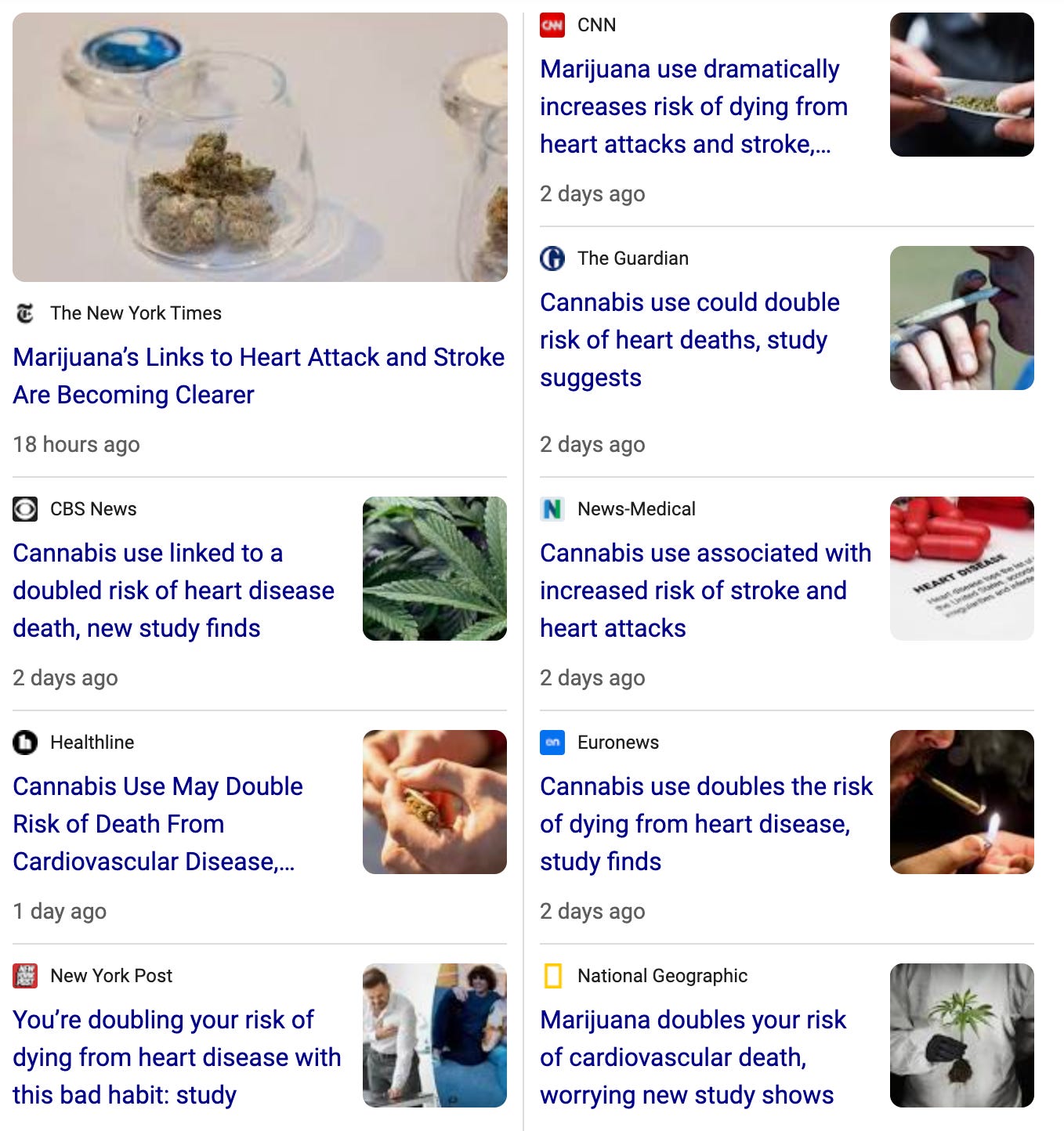
Heart attacks! Strokes! Weed will kill you!
And maybe it will. Or maybe it won’t. The point is: we’ve seen this script before. One research paper drops, and suddenly every media outlet from here to Zyzzyx (look it up) becomes a public health authority. The nuance gets lost, the methodology rarely gets examined, and anyone who’s ever touched a joint is left wondering if they’re now a walking time bomb.
So yes, we’re cautious. You should be too. Headlines are one thing—evidence is another. But still… this time around, we’re not entirely brushing it off. Not because we suddenly trust the health desk at CNN, but because it forces a different question. One we don’t ask enough:
Has weed changed? Or have we changed how we use it?
The Golden Days: Before the Number Game
In the prohibition era, nobody asked their guy how much THC was in the baggie.
Nobody knew. You sniffed it. You looked at it under the light. Maybe it had a name, maybe it didn’t. You judged weed by the smell, the feel, and how it smoked—like people used to judge tomatoes at a farmer’s market.
Fast forward to today:
Dispensaries now label flower like energy drinks.
Shoppers skip the terpene profile and hunt for a number: 27%, 31%, 34%—as if the higher it goes, the better it gets.
Edibles are stronger. Concentrates are common. Entire brands exist just to push THC levels into orbit.
We’ve turned cannabis into a competition. And in the process, we might’ve lost something.
What the Headlines Might Actually Be Getting Right
There’s nothing inherently wrong with high-THC products.
But the obsession with THC percentage has warped how people think about quality. The truth is, 15% flower with a killer terp profile can hit way harder—and feel way better—than a dry 30% nug that smells like hay.
And here’s where those health studies come in.
If cannabis today is, functionally, more potent than ever—and if people are consuming more of it, more often, in more concentrated forms—it’s not out of bounds to wonder if some of those old safety assumptions need to be revisited.
Are we saying cannabis causes heart attacks? No.
Are we saying there’s no risk? Also no.
We’re saying maybe the plant didn’t change—but the culture did.
And culture affects outcomes more than we like to admit.
What Made Us Love Weed in the First Place?
“Remember when weed made you giggle?”
Remember when you shared a joint with friends and had no idea what percentage it was—other than that it was good? Nobody knew the cannabinoid ratio. Nobody needed a certificate of analysis. We just knew when it was right.
Maybe now is a good time to get back to that.
Because here’s the irony:
The same people who defend cannabis as a natural medicine are often the ones chasing the most unnatural highs. Extracted, isolated, measured, maximized. And then we wonder why some folks are getting lightheaded or anxious or burnt out after every session.
The plant was never meant to be a math equation. It was meant to be an experience.
Slow Down. Light Up. Trust Your Gut.
So no—we’re not alarmist. And we’re not doctors.
But if a health study makes you pause for a second and reconsider how you use cannabis, that’s probably a good thing.
Not because the media said so.
Because maybe your own body’s been saying so, too.
So stop chasing the numbers. Trust your senses again.
And next time you walk into a dispensary, don’t ask “What’s the highest THC you’ve got?” Ask what smells the best. What looks the best. What feels like the right vibe.
You might just remember why you fell in love with weed in the first place.