


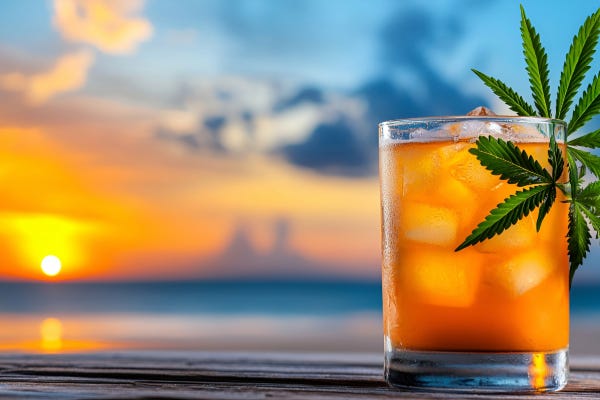
By now, Big Alcohol is nursing more than a hangover—it’s nursing an existential crisis.
Because something strange is happening in America’s bars, living rooms, and backyards. People are still drinking, but not the way they used to. They're swapping whiskey for watermelon THC spritzers. They're microdosing instead of bingeing. And increasingly, they’re realizing they don’t need alcohol to unwind—they just need a better buzz.
And cannabis-infused drinks are delivering exactly that.
The Rise of the Buzz Without the Baggage
The latest industry analysis, reported by Marijuana Moment, makes it plain: when states legalize cannabis, alcohol takes a hit. The data shows alcohol sales drop by up to 15% in newly legal markets. That’s not a blip. That’s a trend—and one that has alcohol executives sweating through their polos at “innovation” summits.
But the why behind it? That’s where things get interesting.
Cannabis drinks—Delta-9 seltzers, THC tonics, microdosed mood-lifters—offer something booze can’t: a functional, feel-good experience without the hangover. No late-night regrets. No sloppy texts. No waking up feeling like you got kicked in the liver by a mule wearing bowling shoes.
Instead, consumers get something modern alcohol can’t deliver: clarity, control, and in many cases, health-conscious calm.
The End of Barf Culture
It’s not that cannabis drinks are healthier in the kale-and-spin-class sense. It’s that they’re not destructive. No one’s crashed a car or started a bar fight because of a 5mg THC spritzer. No one’s vomiting on their shoes from a microdose of hemp-derived Delta-9.
Cannabis drinks are light, social, and above all, intentional. You drink them to elevate—not to erase yourself.
And while Gen Z gets the credit for “killing beer,” it’s broader than that. Millennials, Gen Xers, and even some Boomers are opting out of alcohol not because they’re puritanical, but because they’ve found something better.
Booze Is on the Defensive
The alcohol industry knows exactly what’s happening—and it doesn’t like it. That same Marijuana Moment piece quotes investment analysts warning that cannabis is a "significant threat" to the alcohol sector. Liquor companies are scrambling to invest in THC beverage startups or slap CBD into canned cocktails as a distraction.
Too late. The cultural shift is underway.
Bars across the country are stocking cannabis seltzers. Restaurants are building zero-proof menus featuring hemp infusions. And in states like North Carolina, where hemp-derived THC is thriving under the 2018 Farm Bill, it’s an all-out renaissance. You can get buzzed without breaking the law—or your pancreas.
This Isn’t Just About Health—It’s About Choice
Let’s be honest: alcohol’s not going anywhere. There will always be bourbon snobs, craft beer zealots, and red wine romantics.
But for millions of people, the default drink is changing. The ritual is the same—crack a can, take the edge off, toast with friends—but the chemistry is different. Cannabis lets you turn the volume down without blacking out the screen. It lets you feel good without paying the price in the morning.
That’s not just a health upgrade. It’s a generational reprogramming of what it means to “have a drink.”
Welcome to the Infused Era
Cannabis drinks won’t replace alcohol entirely—but they don’t need to. All they have to do is offer a better alternative for even some occasions, and the numbers start shifting. The more people discover THC-infused beverages, the more obvious the appeal becomes:
No hangovers
No empty calories
No liver damage
No DUI
And most importantly—no regrets
You don’t get that from a tequila shot. You do get it from a microdosed cannabis beverage chilled to perfection.
Final Toast: To the Next Buzz
This isn’t just about weed beating booze in a cage match. It’s about options. It’s about waking up with your dignity intact. It’s about drinking something that makes you laugh instead of cry, groove instead of rage, chill instead of collapse.
The future of drinking? It’s here. It’s infused. And it doesn’t come with a warning label about liver failure.
So here’s to the death of hangovers—and the rise of the happy, high hour.